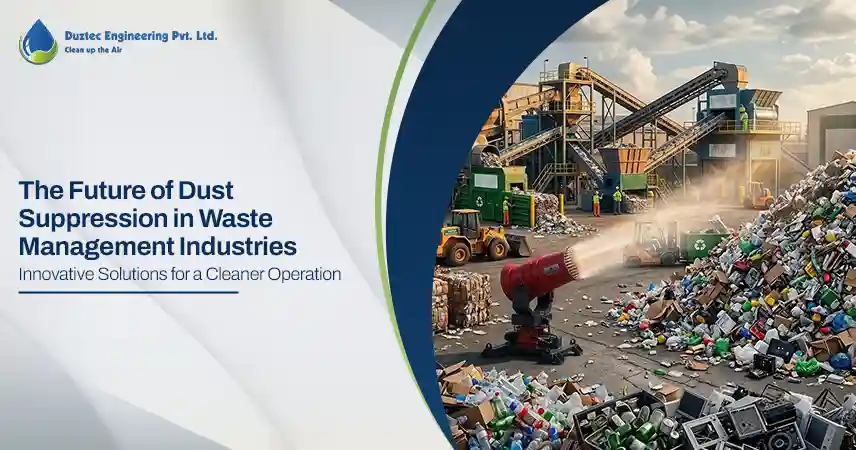
The Future of Dust Suppression in Waste Management Industries
The Waste Management Industry provides a service to keep urban and industrial areas free of waste. However, throughout the course of daily activities, this Industry generates a huge cloud of dust as a result of a number of different activities such as waste sorting and recycling, crushing waste, and disposing of construction debris. When dust is not adequately controlled, it poses a potential threat to the health of workers, those who live near the waste management facility, and the surrounding environment.
Many industries today have turned to newer and more innovative methods of dust suppression to be able to better control the airborne dust produced during their daily operations. Technologies such as dust control cannons, mist systems (also referred to as fogging systems), and fog cannon dust suppression systems have become an integral part of providing a safer and cleaner waste management environment.
Why Managing Dust Is Crucial in Waste Management
Dust Is One Of The Biggest Challenges Faced At A Waste Management Facility. Each Facility's Daily Operations, Such As Off-Loading Waste Materials, Recycling Waste Materials, Crushing Waste Materials, And Disposal Of Construction Waste, Generate Dust Clouds In The Air.
When dust spreads across a facility, it can lead to:
- Poor air quality
- Breathing problems for workers
- Unhealthy working conditions
- Reduced visibility
- Pollution in nearby areas
Over time, dust will also accumulate on equipment and machines, contributing to increased maintenance issues, due to growing environmental concerns, industries are becoming more focused on having adequate dust control methods in place.
Modern day dust suppression systems can significantly reduce the number of airborne particulates and improve safety in the workplace.
Significant Dust Issues in Waste Processing Plants
Waste processing facilities deal with a variety of materials on a daily basis. This leads to the generation of constant amounts of dust throughout the working environment.
Some common dust problems include:
- Dust during waste loading and unloading
- Airborne particles from recycling operations
- Dust from crushing and shredding waste materials
- Dust mixed with unpleasant odours
- Heavy dust from construction waste disposal
Sites where construction debris is disposed of typically generate large quantities of dust due to the constant movement of material (i.e. concrete, sand, and debris).
When dust is not controlled properly, it can migrate off the facility and impact adjacent roads, residences, and businesses. Therefore, it has become necessary for waste management companies to implement effective dust suppression.
Innovative Technologies Defining the Next Generation of Dust Control
The future of dust suppression is moving toward a more technological, intelligent approach to managing dust. Advanced technologies are being implemented in order to provide enhanced dust control while utilizing less water resources throughout the waste management processes.
Some modern dust control technologies include:
- Automated dust suppression systems
- Smart air quality monitoring
- Remote-controlled fog cannon systems
- Water-saving mist systems
- Mobile dust control cannons
These systems use fine mist to capture airborne dust particles before they spread into the environment.
Compared to traditional dust control methods, modern systems provide:
- Better dust coverage
- Lower water usage
- Improved safety
- More efficient operations
Many industries are now choosing eco-friendly dust suppression solutions to support cleaner and more sustainable operations.
The Role of Mist Cannons & Fog Cannons in Enhancing Waste Industry Functionality
Dust control in the waste management sector is significantly improved by using mist and fog cannon technologies. The use of very fine water mist from these systems provides substantial control of the airborne dust produced during sorting, recycling, crushing, and disposing of waste. Additionally, these systems produce a cleaner, safer, and more efficient work environment while reducing pollution and enhancing the air quality.
- Helps control airborne dust generated during waste processing
- Enhances air quality inside waste management facilities
- Reduces the distance dust can travel from construction waste disposal sites
- Creates a safer environment for employees
- Provides effective dust suppression to large areas
- More efficient use of water than traditional sprinkler systems
- Improves visibility in dust-filled environments
- Assists businesses in meeting required pollution control standards
- Easily relocated and utilized in different operational areas
- Ideal for recycling facilities, landfills, and waste transfer hubs
Advanced Solutions for Cleaner and Safer Waste Management Facilities
Current waste management structures are becoming much less harmful and safer for all involved. Industries are able to manage their environment with the help of many current innovations that assist in reducing pollution, while at the same time; keep operating conditions safe for workers.
Some advanced solutions include:
- Smart fog cannon systems
- Automated mist suppression
- Mobile dust control machines
- Real-time air quality monitoring
- Eco-friendly dust control technologies
These advanced technologies help industries reduce dust exposure for workers and improve overall operational efficiency.
As pollution rules become stricter, more industries are adopting modern dust suppression systems to maintain safer, cleaner, and regulation-compliant facilities.
Conclusion
In today's waste management sector, dust suppression has become increasingly important. Modern equipment such as mist and fog cannons have been developed to reduce the amount of airborne dust generated during operations, which will lead to improved air quality and safer working conditions.
Modern dust suppression technologies will also assist industries in becoming more environmentally friendly through better sustainability and pollution prevention, while simultaneously providing clean, safe and efficient waste management facilities.
FAQ's
What is dust suppression in waste management?
Dust suppression is a method used to control airborne dust in waste management facilities using water mist and advanced spraying systems.
Where are fog cannon systems commonly used?
Fog cannon systems are commonly used in recycling plants, waste processing facilities, landfills, and construction waste disposal areas.
Are fog cannons better than traditional sprinklers?
Yes, They provide better airborne dust control, use less water, and cover larger areas more effectively.
Do dust suppression systems improve worker safety?
Yes. They help reduce airborne dust exposure, improve visibility, and create healthier working conditions for employees.