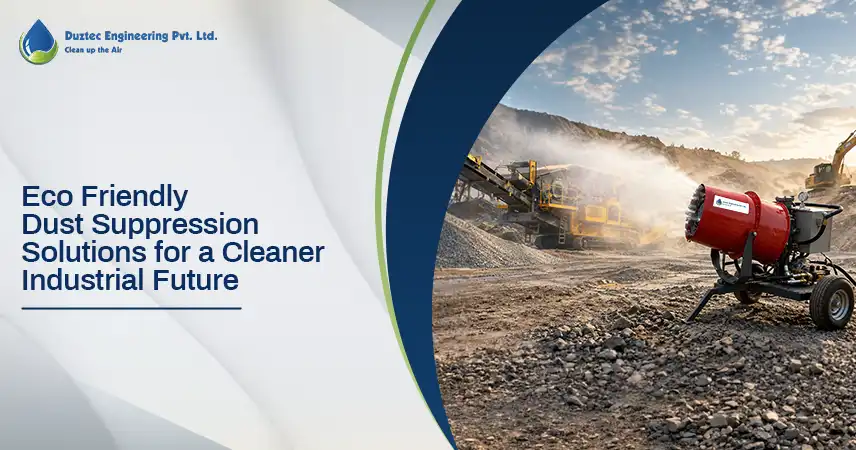
Eco-Friendly Dust Suppression System for a Cleaner Industrial Future
Introduction
Industrial growth often comes with a hidden cost—dust pollution. From construction sites to cement plants, airborne dust impacts worker health, machinery efficiency, and environmental sustainability. This is where eco-friendly innovations are transforming traditional practices.
An eco-friendly dust suppression system uses sustainable methods like water mist, biodegradable agents, and smart technologies to control airborne dust without harming the environment. It improves air quality, ensures compliance, and supports sustainable industrial practices.
What is an Eco-Friendly Dust Suppression System?
A dust suppression system designed with eco-conscious technology focuses on minimizing environmental impact while effectively controlling dust emissions.
Key Features:
-
Uses minimal water consumption
-
Employs biodegradable or non-toxic chemicals
-
Reduces airborne particulate matter (PM10 & PM2.5)
-
Supports long-term industrial dust control
These systems are a modern dust control solution aligned with global sustainability goals.
Why Eco-Friendly Dust Suppression Matters
Industrial dust contributes significantly to air pollution. According to global environmental studies, particulate matter is responsible for millions of premature deaths annually.
Key Reasons to Adopt Green Solutions:
-
Environmental Protection: Reduces harmful emissions
-
Worker Health: Prevents respiratory diseases
-
Regulatory Compliance: Meets pollution control norms
-
Brand Reputation: Positions companies as sustainable
Eco-friendly industrial dust suppression is no longer optional—it’s a strategic necessity.
How Does a Dust Suppression System Work Sustainably?
An eco-friendly dust suppression system works by capturing dust particles using fine droplets or binding agents, ensuring minimal environmental impact.
Step-by-Step Process:
-
Dust is generated during industrial activity
-
Smart sensors detect dust levels (in advanced systems)
-
Fine mist or eco-safe solution is released
-
Dust particles bind and settle quickly
Sustainable Technologies Used:
-
Fog & mist systems for low water usage
-
Smart dust control systems with automation
-
Recycled water integration
-
Green chemical agents
Types of Eco-Friendly Dust Suppression Solutions
1. Water-Based Mist Systems
-
Use ultra-fine droplets
-
Minimal water consumption
-
Ideal for construction site dust suppression
2. Fog Cannon Systems
-
Covers large areas efficiently
-
Reduces airborne dust significantly
-
Common in mining dust suppression systems
3. Chemical Dust Suppression (Eco-Safe)
-
Uses biodegradable binders
-
Long-lasting results
-
Suitable for roads and open areas
4. Smart Dust Control Systems
-
Automated sensors and controls
-
Reduces resource wastage
-
Improves efficiency
Industry Applications
Construction Site Dust Suppression
-
Controls dust from excavation and demolition
-
Improves surrounding air quality
Mining Dust Suppression System
-
Reduces dust during drilling and transport
-
Enhances worker safety
Cement Plant Dust Control
-
Controls emissions during material handling
-
Supports environmental compliance
Benefits of Eco-Friendly Dust Control Systems
Key Advantages:
-
Reduced Water Usage: Up to 60% savings with mist systems
-
Lower Environmental Impact: No harmful residues
-
Improved Air Quality: Significant reduction in PM levels
-
Cost Efficiency: Lower maintenance and operational costs
-
Sustainability Compliance: Meets ESG and environmental goals
Comparison: Traditional vs Eco-Friendly Dust Suppression
|
Feature |
Traditional System |
Eco-Friendly Dust Suppression System |
|
Water Usage |
High |
Low |
|
Environmental Impact |
Moderate to High |
Minimal |
|
Efficiency |
Good |
High |
|
Automation |
Limited |
Advanced (Smart systems) |
|
Compliance |
Basic |
Meets modern standards |
How to Choose the Best Dust Control Solution?
Consider These Factors:
-
Type of industry (construction, mining, cement)
-
Dust particle size and volume
-
Water availability
-
Environmental regulations
-
Budget and scalability
Best Practice:
Combine fog cannon systems with localized spray systems for maximum efficiency.
Expert Insight
In real-world projects, companies adopting green dust suppression technology have seen measurable improvements. For example, a cement plant implementing an eco-friendly dust control system reduced dust emissions by over 80% while cutting water usage by nearly 50%.
This proves that sustainability and efficiency can go hand in hand.
Conclusion
An eco-friendly dust suppression system is a critical investment for industries aiming to balance productivity with sustainability. By adopting modern dust suppression solutions, businesses can achieve better industrial dust control, improve air quality, and align with environmental standards.
The future of industrial operations lies in sustainable dust control solutions—cleaner, smarter, and more efficient.